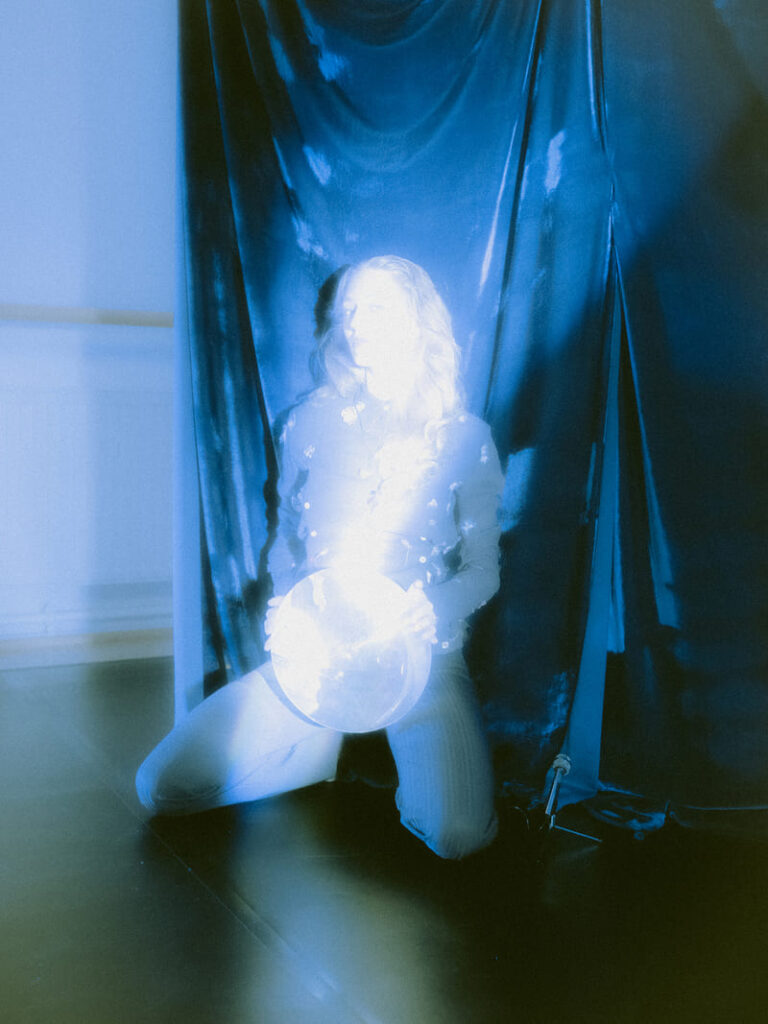
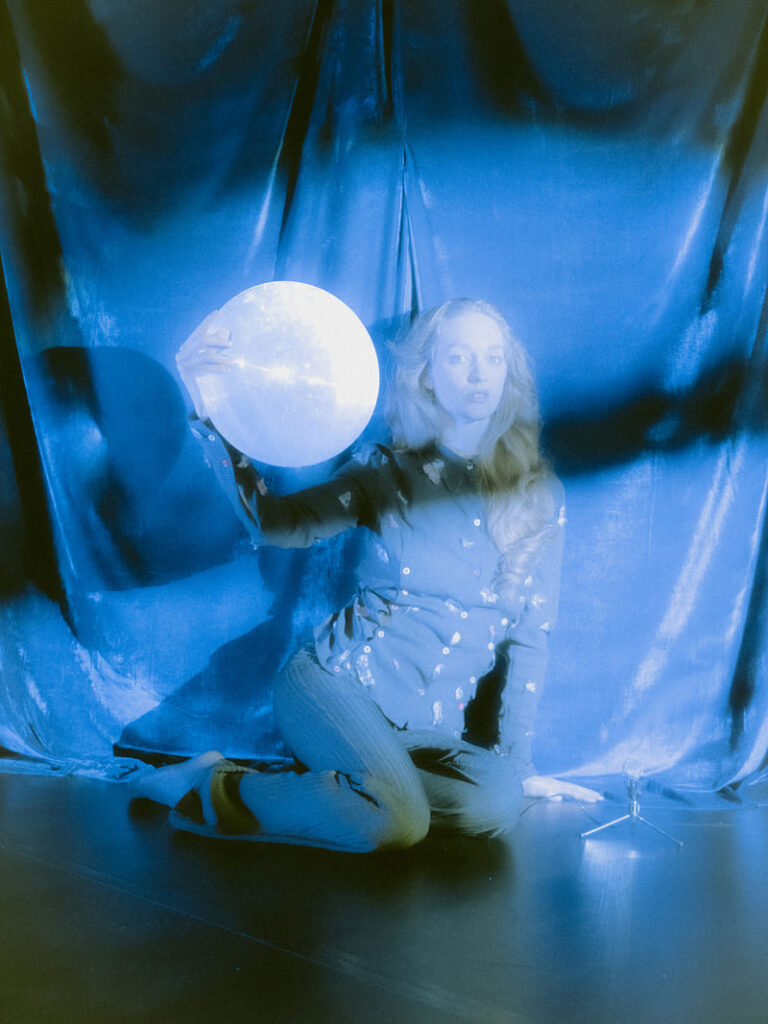
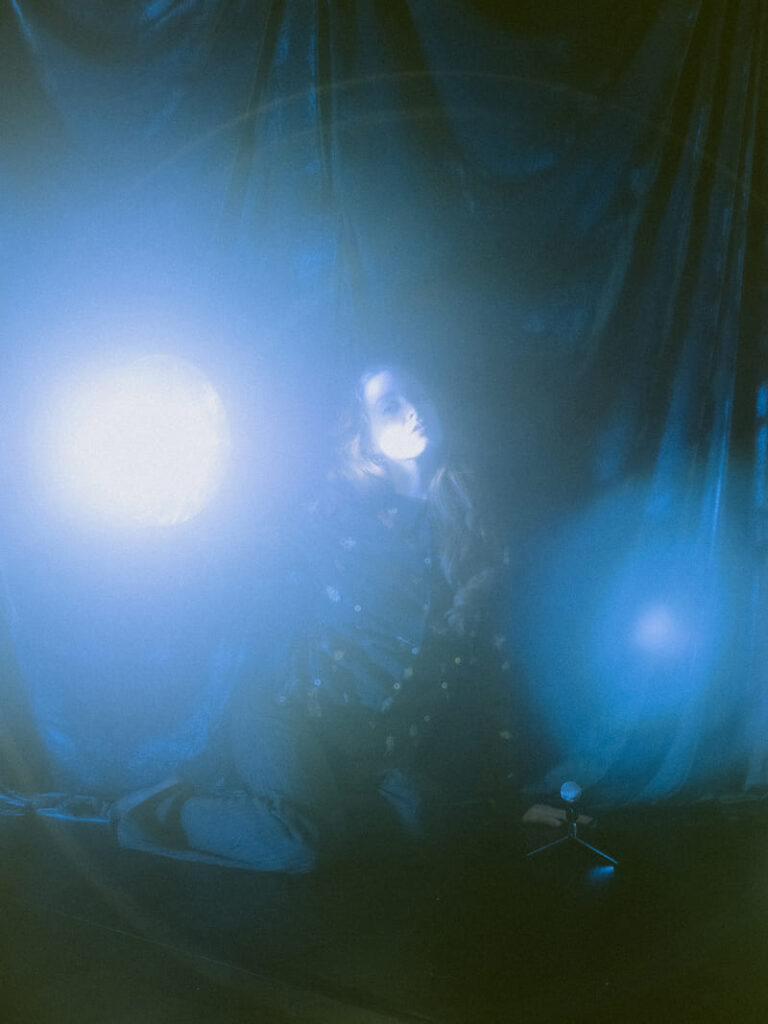
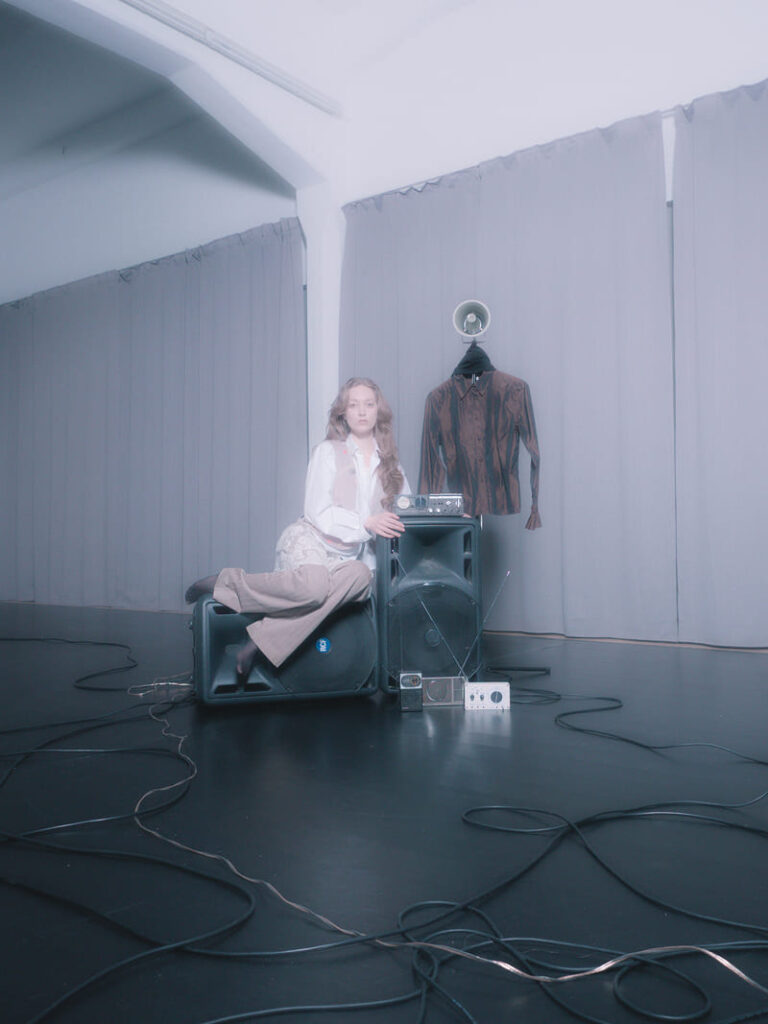
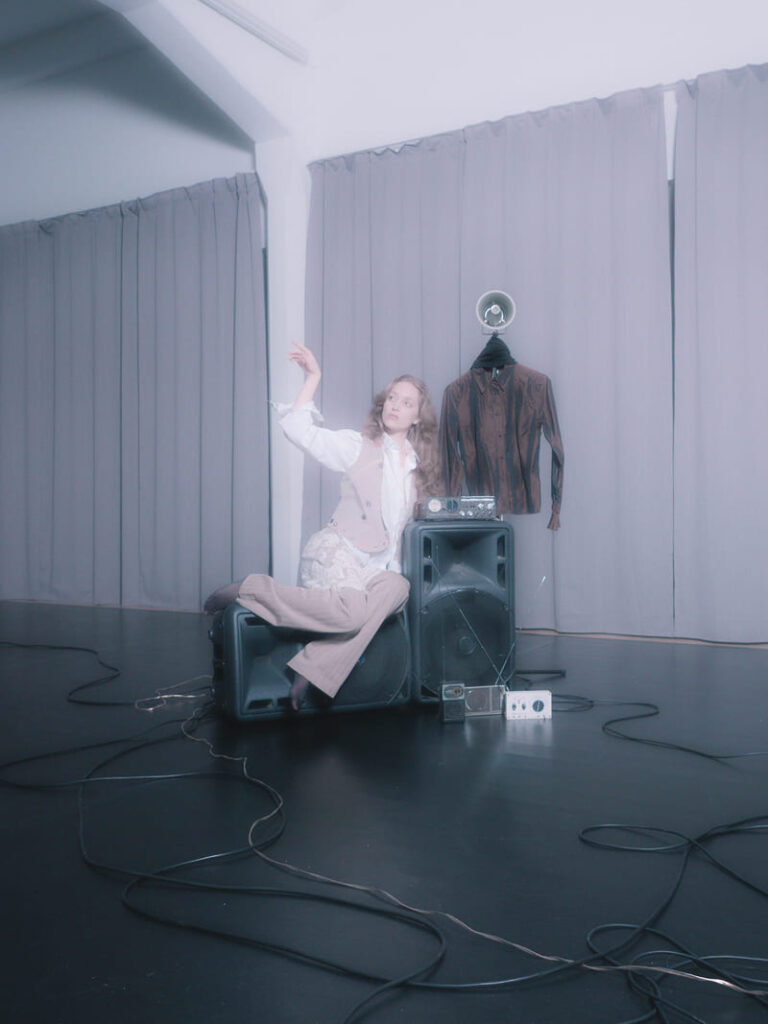
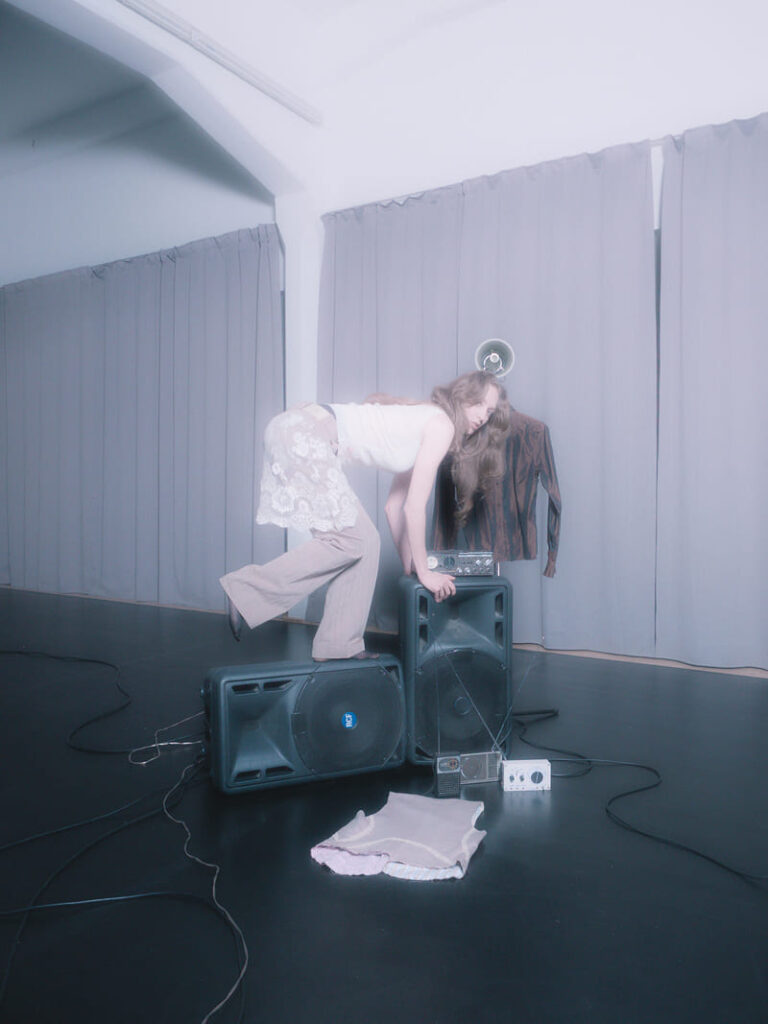
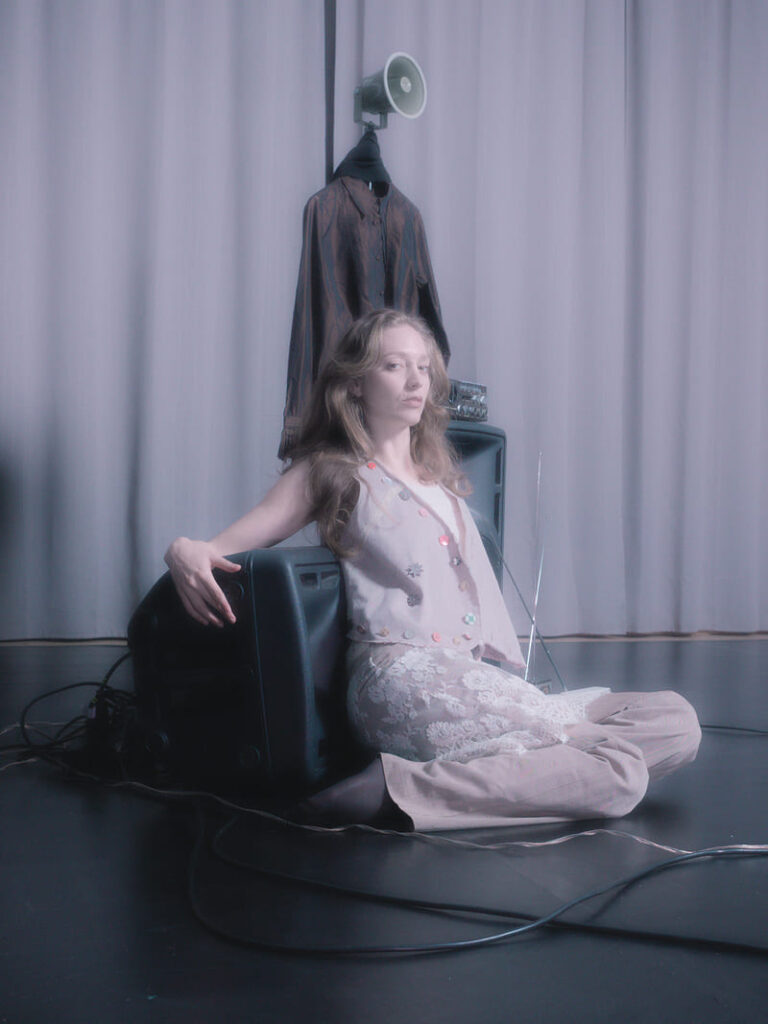
Photo credits: Paola Lesslhumer
Performing arts
2026
Performance
Research, Concept, and Creation Gaia Ginevra Giorgi
Performance: Gaia Ginevra Giorgi, Denise Tosato
Dramaturgical Dialogue Giada Cipollone
Artistic Collaboration Stella Succi
Vocal Practices Veza Fernández
Choreographic Consulting Asher O'Gorman
Lights and Technical Direction Andrea Sanson
Sounds Devid Ciampalini
Costumes Gianni Mattarucco
Space Consulting Cosimo Ferrigolo
Live Electronics Consulting Emanuele Pontecorvo
Curation and Dissemination Edoardo Lazzari
Organization and Administration Giusy Guadagno
Production Extragarbo
With the support of: Snaporazverein (CH); Lavanderia a Vapore – Dance Residency Center (IT); Murmuris (IT); IntercettAzioni – Centro di Residenza Artistica della Lombardia (IT), Linha de fuga (PT); Premio Vienna (Direzione Generale Creatività Contemporanea del Ministero della Cultura, d’intesa con la Direzione Generale per la Diplomazia Pubblica e Culturale del Ministero degli Affari Esteri e della Cooperazione Internazionale e l’Istituto Italiano di Cultura di Vienna); Phonogrammarchiv (AT).
Within the framework of a fake lecture that gradually turns into a séance, the performance explores the stories and practices of female bodies that, through vocal techniques, metaphonic phenomena, and sonic hallucinations, have hacked the languages and patriarchal, class-based practices of knowledge and power within the dominant (medical-scientific) paradigm.
Through a historical reading of the oppressive and pathologizing modes of the male gaze—spanning animal magnetism, spiritualism, illusionism, psychoanalysis, technology, and science—the performance investigates vocality as a tool for reclaiming speech, oscillating between tactics of mimetic deception and desires for resistance.
Photo credits: Paola Lesslhumer